female health matters

Personal stories about female health matters.

May 28, 2008

obesity means social death

Coco's obesity has been classified as a disability and as such she is entitled to welfare payments but she steadfastly refuses to rot at home and continues to actively seek work even though the reception she receives from most job interviewers is a humiliating experience.

"I never even knew that people can die from obesity until I read an article about it," says Coco. "Sure, I know about my risk for heart disease but to be faced with a separate classification for death by obesity is very challenging and smacks, to me, of medical discrimination on top of all the other discrimination I face every day from everyone else."

"The article highlights alienation as the top cause of obesity death and that makes sense to me," says Coco. "If thin people faced as much cruel and humiliating discrimination as obese people do at job interviews -- and every other kind of human encounter -- I wonder if the medical establishment would come up with a new type of thin death classification (not anorexia) to account for the resultant spate of deaths?"

"That the article also highlighted a high Social Security expenditure (% of GDP) as a factor in obesity death also makes sense to me," says Coco. "Nations that are quick to classify obese people as disabled and pay them to rot at home are definitely contributing to obesity deaths."

"When you're pushed out of sight and mind, unloved and unwanted, with nothing better to do than stuff yourself with comfort food while watching soaps you're already suffering a social death, right?"

"Here's the article I read alienation causes obesity death?"

Labels: , , , , , , ,

April 23, 2008

fat figures of fun in China

Pippen visited China recently accompanying her husband on a business trip and left with vivid memories of its culture and people, a better understanding of its ancient civilization and migration history and a deep sense of shame for being overweight.

“The Chinese seem to derive their main source of entertainment from disabilities, variations in size or appearance,” says Pippen, “and foreigners are particularly targeted – even a normal sized westerner is seen as fat!”

"On the rare occasion I saw a disabled person in public I was horrified by the way everyone laughed at him," says Pippen, "but I was absolutely mortified when I became the laughing stock of a group of people because of my size. It wasn't good natured giggling either. It was nasty and cruel and I want to warn all corpulent western visitors to Beijing to steel themselves for a shock to their self-esteem."

"Sure, there are plenty of fat babies in China -- they think they're cute – but very few adults are overweight and in view of the fact that people in some parts of China are living on starvation rations I guess it is also a shock to their system, and self-esteem, to see westerners twice or three times their size."

"The fat babies -- the little emperors -- are the result, of course, of China's one child policy," says Pippen, "and while the policy has reduced China's population it has unfortunately skewed the gender ratio in favor of boys so what China has now is a mass of young men without women to marry them and the future possibility of them becoming unruly little warlords."

“That this revulsion of fat people is now coming to the West, via Chinese influence and migration,” says Pippen, “is something we all should worry about.”


Read more by Pippen on China:

  • Old and New China

  • the miraculous Chinese

  • three races, one perfect?

  • America first settled by Chinese

  • the wealthy Chinese exodus

  • alienated in China

  • China's Ancient Roots


  • Labels: , , , , , , , , , , , ,

    February 20, 2008

    pharma pushed fat laws

    Like many western women, Clothilde is overweight. She has tried a variety of diets since her teens – all of which resulted in her gaining more weight than ever –and now that she is 48, menopausal, and totally accepting of her size and personal power she is gobsmacked that legislation is being proposed prohibiting restaurants and food establishments from serving food to obese customers.

    "It's happening in Mississippi," says Clothilde, "but don't heave a sigh of relief if you don't live there because it won't be long before it's happening where you live, too."

    "Take a look at the background of the guys proposing this bill and you'll understand what it's really all about," explains Clothilde. "The three stooges are Representative W.T. Mayhall, Jr., a retired pharmaceutical salesman; Bobby Shows, a businessman; and John Read, a pharmacist."

    "Don't tell me that these guys haven't got a financial motive for pushing this bill?" asks Clothilde. "A pharmacist, a businessman and a pharma salesman together have the requisite qualifications and experience needed to set up and run yet another pharmaceutical business aimed at forcing us fatties to ingest bitter pills rather than delicious food."

    "What are these guys doing in government pushing their own barrow?" asks Clothilde. "Okay, we all know that some politicians are businessmen on the side, profiting from whatever self-serving law they manage to get enacted – or self-serving war they manage to foment – but it really sticks in your craw that such guys get elected in the first place."

    "Hey, people of Mississippi, did these guys tell you what they had on their mind when you elected them?" asks Clothilde. "I'm not just appealing to all the obese voters in Mississippi but to all the restaurants and food establishments, too, because the proposal is that these businesses are going to be monitored for Fat Law compliance by the State Department of Health and violators will have their business permits revoked.”

    “Nasty."

    "I think most fat people are going to be thinking just like me,” laughs Clothilde. “Put us in prison for disobedience if you like – but you'd have a hard job finding a prison big enough for us big people!"

    Read more of Clothilde's story:


  • fat red tape
  • menopausal fighter
  • Health Nazis
  • Land of the free?
  • independence vs nanny states


  • Labels: , , , , , , , , , ,

    January 20, 2008

    fat families


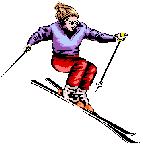
    Zephira is married with two children and faced with the annual vacation dilemma - where to go this year? - she suggested a skiing trip as a healthy option for her fat family and the kids were enthused but her husband wasn't!

    "I expected Joe to turn up his nose at my suggestion," explains Zephira. "He's the type of guy who likes to laze around when he's not working and since our marriage I've slipped into his lifestyle - giving up all the adventurous type of experiences I once enjoyed and as a consequence I'm almost as fat as he is (and so are the kids)."

    "Joe's objections were voted out at the family discussion - and faced with the prospect of going away on his own or coming with us he relented but on condition that he was not going to get on a pair of skis."

    "Actually he rather liked the idea of going somewhere cold in the middle of summer," laughs Zephira, "and he packed some books and his laptop and looked forward to hanging around the ski lodge while we were out making fools of ourselves on skis."

    "It had been close to twenty years since I had last been on a pair of skis," explains Zephira, "and in that time I'd put on a quite a bit of weight so I was more than a little concerned about my ability to cut the snow like I used to."

    "Make a fool of myself or not I was determined to give it a go."

    "The kids and I hired our ski gear and the first dumb thing I did when we got to the ski lodge was to dress the kids and myself with the ski pants on backwards."

    "When we joined the group for our first ski lesson everyone laughed at us," sighs Zephira, "and I got the feeling that Joe had jinxed us with his 'making fools of ourselves' prediction."

    "The kids went off with a children's instructor and I joined the novice adults who were being instructed by a lovely Austrian guy."

    "He asked whether anyone had skied before and like an idiot I said 'yes' and for this bit of honesty he chose me to be the first one to go down a slope."

    "Let me tell you that getting back on a pair of skis is nothing like getting back on a bicycle," laughs Zephira. "Those skis felt like lead weights on my feet and I had no idea how I ever whizzed around on them in my youth."

    "I pleaded with Franz, the ski instructor, to let me go to the back of the line because I'd forgotten how to ski - but he insisted I went ahead - and to make me feel better he would go before me backwards to catch me if I fell."

    "Well," laughs Zephira, "I took off and you guessed it - I fell right on top of Franz and nearly crushed the poor guy. It's a good thing that Joe wasn't looking because he would never have let me live this down."

    "After an hour of instruction I was none the more comfortable on a pair of skis and my legs and back were aching."

    "I told Franz I'd try again tomorrow and went back to the lodge to join Joe."

    "When the kids came back they were so filled with enthusiasm and joy that I felt like a fat lump for giving in so easily."

    "The next day I got up early and did a lot of practice on my own and by the time Franz turned up I showed him what I could do and he was very impressed - in fact he gave me a wink!"

    "That wink really boosted by spirits," laughs Zephira. "It reminded me of all the fun I used to have on the snowfields with the guys."

    "I forgot about my aching legs and back and stayed out on the snowfields for most of the day after that - if I wasn't going to have a mad passionate affair with Franz then I was definitely going to lose a lot of weight on this trip!"

    Zephira's story first appeared as zephira: the skiing trip and is reprinted with permission.

    Labels: , , , , , , ,

    October 08, 2007

    big fat virtual protesters


    Bethel makes the point that the Internet provides a harmless release valve for social outrage that would otherwise topple imperious or incompetent governments, and she feels that our governments actively encourage virtual worlds in which we vent our spleens at virtual governments rather than the real-life ones -- and in passively protesting in this way, rather than being out there marching with placards, we become fat and ineffective citizens.

    "Why do you think that the Internet has been left alone -- without any government constraints on what, in some cases, is downright vile criminal behavior?" asks Bethel. "I'll tell you why, it's because the Internet provides a harmless release valve for all of our outrage at the government's erosion of our rights and failure to keep to its part of the social contract."

    "All of the outrage that our ancestors once used to behead imperious kings, topple incompetent governments and strike out on their own for independence we are now releasing harmlessly into the ether -- having no impact whatsoever on our governments, but quite an impact on ourselves in terms of fat gained from spending hours online."

    "Because our complaints to our representatives and government departments are ignored, we get online and vent our anger in discussion groups and blogs," explains Bethel. "Because we never meet our fellow dissenters, except online, we are powerless to form any group capable of being a real-life threat to the arrogance and hubris of what are now our political masters, not our public servants."

    "We vent, we rant and rave and then we switch off our computers, calm down and go about our daily lives until the next outrage from the government makes our blood boil."

    "And then one day, when all of our rights have been removed -- and every pleasure known to man has been banned -- the government behind the government will show its face," says Bethel. "It won't be pretty, and when we whisper together, how did this happen?, we may remember how we put up with so much, swallowed so many lies and went along with every one of the changes foisted upon us -- most for our good, of course -- and how feebly we protested or supported those who were being persecuted as we stuffed our faces with food to fuel our virtual protests."

    "The only life we will have left to call our own will be lived in a 'virtual world' -- as so many of us are already experiencing, especially our children," sighs Bethel. "In the virtual world we can cowardly act out being the type of citizen we would like to be in real life, and our political masters encourage this to the point, actually, of providing free Internet access."

    "In Orwell's masterpiece, 1984, it was drugs that turned us into weak, cowardly and acquiescent citizens," says Bethel, "but we never saw the Internet in this respect, did we?"

    "We thought it was a power of good that would lead to greater freedoms," says Bethel, "but it has weakened us in the most insidious of ways. The more time we spend online, the less we exercise ad the fatter we become."

    "From time immemorial, there has been a ruling class and a slave class and what happened last century was a blip in history," says Bethel. "All of the rights we fought for and won last century are slowly being eroded. Our success is leading to our downfall because no society can operate successfully when it is top heavy and too privileged -- and the rest of us are bottom heavy and becoming more and more useless every day."

    "What I'm trying to say is that right now there are too many of us wanting too much and resources are getting thin," explains Bethel. "When our population was smaller we were able to turn the tide and call the tune because our labor was needed -- and our work was labor intensive. Now, with every job that goes offshore -- or is taken by a guest worker -- our rights become irrelevant and what work remains is soft, just like our bodies."

    "When all of our real-life rights have been eroded, and the only life we have to call our own is in a virtual world, our political masters will interfere with that world, too," says Bethel. "Moles will enter our virtual worlds and enslave us there, too, and when we are totally demoralized we will make easy slaves."

    "A virtual citizen is just that -- an illusion -- but an overweight body is anything but."

    Labels: , , , , , , , , , , , ,

    May 03, 2007

    weight loss analysis

    When she retired at 60 Gypsy was at her heaviest weight ever (80kg/176lbs) and with time at her disposal she tackled her weight problem with the same analytical skills that she once used at work.

    "I made weight loss my full-time job," laughs Gypsy, "but it's no laughing matter really because my health was being seriously compromised by my weight."

    "Because I approached weight loss with a professional accountant's eye," explains Gypsy, "my weight loss spreadsheet took into account everything about the food I ate."

    "My base year comprised the contents of my last shopping cart when I weighed 80kg (176lbs)," says Gypsy. "I listed every item in the cart along with its weight and nutritional content."

    "I rarely drink, eat junk food or obviously fattening things like ice cream, cake and chocolate," says Gypsy, "so I couldn't understand why my weight over ten years had ballooned from 60kg (132lbs) to
    (80kg/176lbs)."

    "It was pretty obvious even at that early stage of analysis that the main culprit was bread," sighs Gypsy. "It accounted for twice as much in calories or kilojoules as the next culprit, full cream milk."

    "Just by cutting out bread and increasing my fruit intake -- and substituting full cream milk for skim milk -- I lost a huge chunk of weight within three months," says Gypsy, ''and I managed to continue to lose weight for the rest of the first year."

    "By the end of the first year of this simple diet I weighed 69kg (152lbs) and looked and felt great," says Gypsy. "My gaol was to slim down to a healthy 60kg (132lbs) and I naively believed that by reducing my calorie/kilojoule intake I would achieve that goal by the end of the second year."

    "My base year's average daily intake was 10,101kj, my first year's average daily intake was 7,472kj and my second year's average daily intake was 7,165kj," says Gypsy, "and guess what, I gained weight."

    "I was so disappointed and couldn't believe that by literally starving myself for a year -- keeping my average daily intake well below the previous year -- I now weighed 72kg (159lbs)."

    "In my third year I experimented with a variety of diets -- high protein and then a nut diet -- and because my weight didn't shift much I then reintroduced bread in moderation and at the end of the third year I weighed 73kg (161lbs) with an average daily intake of 9,621kj."

    "Hello? What's going on here, I thought," laughs Gypsy. "In the base year my average daily intake was 10,101kj and I weighed 80kg (176lbs), in my first year my average daily intake was 7,472kj and I lost 11kg (25lbs), in my second year I reduced my average daily intake to 7,165kj and gained 3kg (7lb) and in my third year I increased my average daily intake to 9,621kj and I gained just 1kg (a few pounds)."

    "On the basis of my calculations, with an average daily intake of 9,621kj I should have gained heaps and be almost back to my base weight," says Gypsy. "That I wasn't pleased me, but it just goes to show that there is much more to weight loss than counting calories."

    "I then looked at the amount of food I was eating -- it's weight -- and took a simplistic view that if I was eating more I might weigh more," says Gypsy, but that didn't pan out either."

    "In the base year my average daily intake was 1457g, in my first year my average daily intake was 1,575g (more!), in my second year my average daily intake was 1,483g (less) and in my third year my average daily intake was 1,882g -- which was far more than my base year!"

    "Right now I'm in my fourth year and almost ready to give up," sighs Gypsy. "So far, my average daily intake is 8,710kj/1538g, I weigh 76kg (165lbs) and it looks like I am soon going to be back to 80kg (176lbs) despite watching everything I eat."

    "My only ray of hope is a factor I have just discovered," confides Gypsy. "It's the kilojoule per gram ratio which you arrive at by dividing the average daily kilojoule intake by the average daily gram intake."

    "In the base year my average kilojoule per gram ratio was 6.93, in my first year my average kilojoule per gram ratio was 4.74 (less), in my second year my average kilojoule per gram ratio was 4.83 (more), in my third year my average kilojoule per gram ratio was 5.11 (more) and right now it is 5.66 (more)."

    "The kilojoule per gram ratio is the only factor which can explain why I have been gaining weight since my first year of dieting," says Gypsy. "I won't know until my fifth year of dieting whether or not it is going to be the magic bullet, but in the hope that it is I am now in the process of cutting out all food that has a high kilojoule per gram ratio and increasing all food that has a low kilojoule per gram ratio."

    "And guess what?" laughs Gypsy. "The dietitians are right about eating more vegetables. By increasing my fruit intake -- especially grapes, melon and plums -- I was inadvertently increasing my kilojoule per gram ratio!"

    "If a gram of mushrooms has a ratio of 1, a gram of grapes 5 and a gram of bread 10 then you don't have to be a mathematician to work out that you can eat the equivalence of a loaf of bread in mushrooms and feel full as well as losing weight."

    "My initial weight loss was due entirely to substituting fruit for bread!"

    "The only fly in this theory," sighs Gypsy, "is that when I weighed a healthy 60kg (132lbs) I ate a lot less vegetables and far more bread than I do now."

    "At 76kg (165lbs) I may not look too good but I feel a lot better than I did at 80kg (176lbs) and everyone says I should be grateful for improved health," says Gypsy, "but I do want to look good as well."

    "I'm now using my analytical spreadhseet skills to look at other factors in my life since I turned 50 that caused me to gain weight," says Gypsy. "I think stress was a huge factor in my last 10 years at work -- I literally worked, ate and slept -- but that's all behind me, now."

    "If my weight gain since 50 was just a hormonal thing then there's not much I can do about it -- or want to do about it," says Gypsy, "but if it's a matter of eating more vegetables and starting a solid exercise regime at the same time then I can do it."

    "I have to bear in mind that it took ten years to put on weight and might take another ten years to lose it."

    Labels: , , , , , , , , ,

    fat police and lawyers

    Leisha and husband are in their thirties and have two children. They are pleasant people, they attend church regularly, they work hard and mind their own business and their blood boils when other people -- the fat police -- sneer at them for being overweight.

    "Sure we eat convenience foods, who doesn't?" says Leisha. "But I don't believe eating lettuce leaves every day is a healthier way to live and besides which obesity is nothing new."

    "People have been fat since time immemorial," laughs Leisha, "and in most other cultures -- except ours -- obesity is a sign of wealth and importance."

    "I've heard of a tribe in Northern Africa that actually force feeds its little girls to ensure that they're fat enough for marriage," says Leisha. "Now, that's a place the fat police and the child abuse police should be focusing their attention on and leaving us alone."

    "My grandparents and probably yours, too, nearly starved to death last century," explains Leisha, "and for a long time someone who was skinny was considered unfortunate or, in other circumstances, suffering from worms."

    "I can't understand the fat police who think Marilyn Monroe -- the blonde bombsell of the 1950s -- was overweight and wouldn't be a good role model for women today."

    "Hello? My husband thinks Marilyn Monroe would have been more attractive with a few more pounds and so do I," laughs Leisha. "And the sort of women the fat police are putting forward as good role models for women -- the anorexic catwalkers -- are an insult to all women and especially for little girls."

    "We're told that being overweight is a health hazard," says Leisha. "Hello? What isn't a health hazard? We're all going to die and I'd rather die fat and happy than thin and miserable and nobody in their right mind believes that these people actually care about our health."

    "Who are the people responsible for the fat police and the shift in our cultural values?" asks Leisha. "What changed our country from a free society to one where you can't do anything without being criticized or sued?"

    "Is immigration to blame for this? Are we bringing in too many people from communist countries who grew up being dictated to and don't know the meaning of freedom?"

    "I heard that in rural China they're still enforcing the One Child Policy -- aborting babies in late term pregnancies," sighs Leisha, "and if our government has employed immigrants from this sort of environment is it any wonder that our social policies have changed?"

    "Actually, the One Child Policy in China has resulted in a lot of fat little kids," laughs Leisha. "So maybe I'm wrong on this point -- and Mao, himself, wasn't exactly skinny, was he?"

    "I do know that the anti-fat movement grew out of the anti-smoking movement started by Professor John Banzhaf of George Washington University Law School and his ASH organization," says Leisha. "Puffed up from his success suing the tobacco companies he turned to the food industry and already has had success in eight fat law suits -- if not personally, then through the students he teaches."

    "I agree that consumers need to know exactly what they're buying and that Banzhaf did good in exposing negligent and criminal behavior," says Leisha, "but why did legal action against companies have to translate into social sanctions against consumers?"

    "The government has ruled that health insurance companies can charge fatties more in order to encourage us to lose weight and pay more of the medical costs of obesity," says Leisha. "Is this fair?"

    "What evidence do they have that fat people cost more in medical costs than thin people -- or old people or any other type of person?" cries Leisha. "And what right does the government have to encourage us to lose weight? That's not the business of government!"

    "We're happy and healthy at the weight we're at and nobody is going to tell us to lose weight," says Leisha. "And if any fat person is ever denied medical help on account of not being thin then there's going to be a revolution like you've never seen before."

    "We're told that fast food is addictive in the same way that drugs are," says Leisha. "Well, hello, tell me what isn't addictive? Sex, the internet, computer games, gambling, even sport -- one of our neighbors is so hooked on the gym that she goes crazy if she misses a day -- and if addiction is the foundation of these fat laws suits then what is going to be next?"

    "In order to save their own skins from laws suits the food companies -- like the tobacco companies -- have issued warnings to consumers about eating too much," says Leisha, "but in doing this they're blaming us for being fat -- making us social pariahs -- and it won't be long before every Big Mac carries a graphic warning about possible diseases we can contract from eating their product."

    "Sure, I take personal responsibility for being fat," says Leisha, "but why do the lawyers, the government and the food companies have to make out that being fat is a some sort of social failing for which I should be penalized and turned into a social pariah by the fat police?"

    "My husband and I are scared that our children may be encouraged by the fat police to sue us for negligence or child abuse one day," sighs Leisha. "They're not yet old enough to understand the legalities of it all, but they are definitely old enough to be hurt by fat taunts."

    "Who is to say that being overweight is purely a food issue?" asks Leisha. "Don't genes play a part in it all? How come some people can eat like horses, without exercising, and never gain weight?"

    "As far as I'm concerned, these law suits are all about money -- greedy people wanting to use whatever they can to bring a case against multi-million dollar industries, and greedy lawyers only too happy to help them do it," sighs Leisha. "And we mustn't forget the gullible public at large -- the fat police -- who have been told that obesity costs the country billions of their hard earned tax dollars each year."

    "Take money out of the equation and nobody would care less."

    "As Banzhaf said: 'we already agree that smokers should pay more for life insurance; those who live in older wooden homes should pay more for fire insurance; and those who drive expensive cars should pay more for automobile insurance'," relates Leisha. "Doesn't that tell you what it's really all about?"

    Labels: , , , , , , , ,

    January 08, 2007

    a happy fatty!

    Loretta is 26 and a great communicator. She's currently out of work and correctly states that her size is a drawback in the job market.

    "I love fast food, and I'm proud of being a large girl -- a happy fatty -- and I have a philosophical attitude about my size and my prospects of gaining another job quickly."

    "I have a great resume and I've reached preliminary interview stage for lots of jobs," says Loretta, "but I always lose out on actually getting the job. I guess a skinny person always comes first -- buy hey, I happy about coming second just as long as I get a job!"

    She has tons of enthusiasm and a can-do attitude - which employers appreciate -- and she knows that making it to the preliminary interview is a monumental victory in itself.

    "A lot of people don’t get that far," sighs Loretta, "but some of the interviews I've been to have been awful. You know the type -- when their jaws drop when you walk into the room."

    She has come to the conclusion that despite what employers state they want, the main criteria upon which you're judged at the preliminary interview is your appearance -- but particularly your size.

    Loretta takes pains to read up about the history of the company, and she learns the name of the CEO as well as key personnel, but she feels it never does her any good because she doesn’t pass muster at interviews because she's too fat.

    “I’m short, dumpy and average looking -- just like my parents and boyfriend,” laughs Loretta, “and that’s the way I am and employers can either like me or lump me. I’m not going to put myself down or go on some starvation diet just because I don’t fit the image of what they think women are supposed to look like."

    "Sure, I’m fat, but I’m happy fat.”

    “Everyone goes to interviews looking their very best,” says Loretta, “but it is an unfortunate fact of life that being immaculately groomed and dressed is not enough. Our society places a great deal of emphasis on height, build and looks. If you’re tall, slim and good-looking then you have a great deal in your favor from the minute the interviewer catches sight of you -- if that is his or her preference -– and this subjective assessment is especially common in the type of industry I target -- media, arts and advertising.”

    In Loretta’s previous temp job with a high-profile publishing company the unofficial way of interviewing women for new positions was for the men in that company to check out the hapless applicant in the reception area and rate her from 1-10.

    “Believe me,” sighs Loretta, “while you are sitting there in the reception area watching all the busy people coming and going, they are not always coming and going on official business. Someone like me would get a rating of minus-10 from those guys. It’s not fair, but that’s the way the world is.”

    Loretta is quick to add that this does not mean that if you’re of average appearance, you don’t stand a chance.

    "The vast majority of women are average looking, and more than slightly overweight, just like me," says Loretta, "and our time will come when all the slim good lookers have got jobs. Just because you're fat you shouldn't think you're not good enough for a top job. You are, and so am I."

    Loretta adds there are types of positions where good looks may be a disadvantage -- and women who take this whole emphasis on appearance to its logical conclusion should ask themselves: “Would I really want to work for a company where my appearance is more important than my human qualities?”

    Loretta knows that this type of subjective selection criterion is discriminatory, but she philosophically accepts that despite all manner of laws to stamp out discrimination of any description it is a cruel fact -- if not a natural tendency -- that some companies have a subtle policy of choosing their employees solely on appearance and mainly on size.

    “It would be foolish to discount it as a prime factor in our selection for a job or a mate or even a girlfriend,” claims Loretta.

    "After appearance, communication is judged," says Loretta, " and unless I’ve already spoken at length on the telephone with somebody from the company employers have no real way of knowing whether I can string two words together until they interview me."

    "Luckily for me, I have great communication skills and I believe that women who are articulate without being pompous, informative without being boring and chatty without being garrulous, will always make a good impression -- despite their obesity.”

    She is never nervous about asking all the questions she needs to ask about the job. She is well aware that interviews are two-way streets and she enjoys interviewing the interviewers!

    As Loretta points out, she wants to be happy in this job, and if an interviewer is not amenable to answering all of her questions then she picks up very quickly that she has already been disqualified for the job on account of her appearance not being good enough.

    “Sometimes when I walk into interviews I see jaws drop,” sighs Loretta. “They just don’t expect a fat woman to be applying for the job, and that’s really stupid because some of the interviewers are fatter than I am.”

    “I think another very important factor in the initial interview process is whether you’re extraverted or not,” explains Loretta. “The introvert is at a great disadvantage at the initial interview stage and it’s no good pretending you’re bright, outgoing, a real ‘people’ person and always enthusiastic when you are not -- and especially not that way when under the pressure of an interview.”

    Loretta is reasonably outgoing, but admits that sometimes the pressure of an interview dampens her enthusiasm.

    “Some positions,” says Loretta, “require a retiring type, someone who can cope with spending a lot of time alone, but most jobs require a great deal of human interaction for which the introvert is not suited. I feel sorry for women who aren’t as outgoing as I am because their chances of getting a job are not good, so being slim and beautiful is not always as important as an extraverted personality.”

    “A good interviewer,” explains Loretta, “will also be able to elicit if you have a genuine interest in people outside of yourself. It’s about empathy. If you belong to a few community organizations, like I do, and can talk easily and truthfully about the community work you do, then you will be highly regarded no matter what sort of position you are applying for and however fat you are.”

    Loretta is involved with her local arts community catering for disabled children and she believes it not only proves that she has community spirit but also an empathic nature, an ability to get on with people, which is a highly desirable trait to have when so many jobs these days, even the top jobs, require a ‘people’ person.

    “Also,” adds Loretta, “when so many jobs these days are customer service orientated -- just talking to people on the telephone -- being overweight shouldn’t be a problem, but I guess employers are worried about health concerns and liability. If I fell down the steps because my tummy is too big to see where my feet are going, I guess employers would be worried about employing me.”

    “Anyway, it’s only a matter of time before I get another job,” smiles Loretta. “In the meantime I’m getting lots of practice with my interview skills and piling on the pounds eating twice as much as I would be if I were working!”

    "Like I said, I'm a happy fatty and I'm not going to get depressed about the shallow prejudices of others."

    Labels: , , , , ,

    November 22, 2006

    walk don't drive!

    Cindy is 32, single and childless and holds an executive position. After moving from a city apartment to a magnificent house in the suburbs and buying a SUV she started piling on the pounds and felt lousy.

    "At the time I wanted to show off my wealth and announce to the world that I had made it," says Cindy. "But most of all I wanted to own an automobile - a big SUV just like the one in the sexy ads."

    Cindy soon found that one of the drawbacks of suburban living is that the further we live from our workplaces in the city, the more reliant we become on transport.

    "Train and bus commuters are regularly held to ransom by strikes and breakdowns in the service," says Cindy, "but automobile owners have far more problems with traffic jams and when my SUV broke down or needed servicing -- which it did regularly -- I became distraught."

    "I never really knew what stress was until I became an auto owner," sighs Cindy, "and I guess the more stressed I became the more I ate. To make matters worse, I started using the vehicle for short trips that I once was happy to walk. I became fat and lazy."

    "Sure, it’s great to have an automobile to jump into for weekend jaunts," says Cindy, "but after the novelty wore off I just didn’t have time or energy to go weekend driving. I soon discovered that apart from driving to and from work, I used my automobile for little purpose other than driving a couple of blocks to buy a newspaper. I did this more to justify owning a car than because I was too lazy to walk."

    Her suburb, like most suburbs, has good, cheap and frequent public transport - and she didn’t live more than a couple of blocks away from shops - so she really started feeling guilty about her extravagance and stupidity and thickening waistline.

    She also found that owning an automobile is very expensive. More expensive for her than anyone else, perhaps, because she had to pay parking fees in the city on top of regular vehicle expenses.

    "Most people living in city apartments just don't have a need for a car," says Cindy, "and they're richer and slimmer because of it!"

    "Nobody can deny the joy of getting into a brand new automobile, smelling that brand new leather smell, taking to the open road and attracting the envy of everyone who catches a glimpse of you passing by in your SUV," sighs Cindy. "I was more thrilled to show off my new SUV than my new home. It was a novelty for me. It was my first vehicle!"

    Not everyone is going to be envious, though. Plenty of people have escaped from the drudgery of car ownership and are walking or using public transport. When a large chunk of your income goes into paying for automobile expenses -- and especially when your income doesn't quite cover the costs of automobile expenses and you need to take out a second or a third personal loan to cover them -- you start to do some thinking.

    "It wasn’t just the astronomical cost of owning and running the vehicle -- and the personal cost in terms of extra fat and general unfitness that I thought about," says Cindy. "I thought about the environment -- acres and acres of dead cars and acrid air to breathe. The road toll -- thousands of people getting killed or maimed on the roads every year, and road rage -- stressed out drivers abusing the hell out of each other."

    "After much soul-searching I decided to get rid of the SUV," says Cindy. "I needed to put myself into a position where I had no alternative but to walk everywhere."

    "I started a get fit routine by regularly walking around my suburb in the evenings after work," says Cindy, "and I also joined a grass roots movement to get into cleaner and healthier living."

    "I advise anyone working to pay for a car, or paying for a car in order to work, or considering moving to the suburbs in order to own a car, to think very hard about SUV ownership," says Cindy. "These gas guzzling monsters not only break your bank but they have a negative impact on neighborhoods and the world at large and they also make you fat and lazy!

    "If you own a SUV," explains Cindy, "it ends up ruling your life and ruining it, too. SUV ownership, for me, meant a stack of fat around my butt and a stack of bills in my desk drawer - both of which I’m still working hard to get rid of!"

    When Cindy got rid of her car and the expenses it generated it was the best thing she ever did. She's now leading a happier and healthier lifestyle.

    "I walk to the railway station every morning and I commute by train to the city and I'm feeling skinnier already," laughs Cindy. "I just wish that everyone who lived in the suburbs did the same thing, but sooner or later everyone will be forced to walk due to gas becoming either a scarce commodity or a banned substance due to air pollution."

    "Honestly," says Cindy, "I just bought the house to go with the SUV and now that I no longer have it I feel a bit silly stuck out in the suburbs in a big house all by myself."

    "There's really not much life in the suburbs as far as walking goes," says Cindy, "and in that respect I do miss living in the city where everyone walks and cars just drive by."

    "I guess I’ll be moving back to a city apartment one day soon," she laughs, "and it will be great to be trim, taut and terrific again."

    Labels: , , , , , , , , ,

    the fat trap

    Lana is 24, a single mother of two young children and she’s caught in a fat trap that prevents her from getting a job and forces her to depend on welfare.

    "I am desperate to get out and earn some real money," says Lana, "but for every successful transition from welfare to independence there are thousands of failure stories - like mine - but all we ever hear about are the success stories."

    "Tune into Oprah," says Lana, "and you will never hear about the failures. The feeling is that when women fail it’s their own fault, that they're not trying hard enough, yet everything in life involves winners and losers."

    "Think about it," explains Lana. "Without losers, there would no winners. And nobody could be a bigger loser than me - and I mean BIG."

    Lana believes that her main obstacle to finding a job is her size. She admits to being grossly overweight but denies eating more than she needs.

    "I can't afford stacks of so-called healthy foods like lean meat, fish, fruit and vegetables," complains Lana, "so I just fill up on the cheap stuff and I'm hungry all the time and so are the kids."

    "I really believe that most of the cheap food we're eating these days is pumped with growth hormones and other stuff that affects our metabolisms."

    "My kids are already taller than anyone in my family, and I don't think that it's natural. There has to be something in the food that's making them giants and turning me into a balloon."

    If success in life is defined as having the wherewithal to support fully oneself and one's children without the need for welfare or a network of support workers, then Lana is adamant that only a very few women like her are likely to be successful.

    "It’s a downward spiral as far as I’m concerned," sighs Lana. "As soon as I went on welfare I started putting on weight, and the longer I stay on welfare the fatter I am going to get and the fewer chances I am going to get to better myself and my kids."

    Lana asserts that a great many welfare women like her try again and again and end up right back where they started.

    "Why?" laughs Lana. "Mostly because the help given to us has been inadequate but in fairness some welfare women are really incapable of taking care of themselves and coping with their extraordinary circumstances as single mothers."

    "I know that I’ve often been overwhelmed by my circumstances, but I’m deadly serious about wanting to lose weight and get out of welfare hell."

    Lana believes that there is nothing wrong with accepting that some women just can't take care of themselves and their children.

    "Because we live in a civilized society," says Lana, "I feel that it's everyone’s duty to support those who can't help themselves - and that includes emotionally immature women as well as the elderly, the sick, the disabled and the unemployed."

    As for the women who are not trying hard enough, Lana suggests that this in itself is often - not always - symptomatic of emotional immaturity, an inability to cope.

    "Given training with valuable skills, a supportive job and tons of social support, only an emotionally immature woman would fail," explains Lana, "but the truth of the matter is that a lot of welfare women do not get the type of training, jobs and social support they need in order to ensure them an opportunity to succeed."

    "I most certainly didn’t get the help I needed," confides Lana, "and without that help it's too easy to slide into apathy and obesity."

    Lana says that most of the help on offer to welfare women like herself is woefully inadequate and is lip service only.

    "Welfare is not a stepping-stone to success for the vast majority of single mothers," asserts Lana. "On the contrary, it’s a step down to fat hell."

    Lana believes that there is an expectation in our society that people should stand on their own two feet and not be a burden to others, or expect others to help them.

    "The hallmark of a really successful woman is someone who rises from the pits without any help whatsoever," says Lana, "but why is it that they all seem to be beautiful and slim?"

    "The feeling abroad is that if Jane Doe can do it, so can I," says Lana, "but this is a fallacy."

    "Let's put it this way," says Lana. "My namesake, Lana Turner, was discovered working as a checkout chick and rose to become a wealthy film star. Michelle Pfeifer also went the same route. If they did it, then did I fail when I once worked as a checkout chick?"

    "And what about Oprah herself?" asks Lana. "She went from an underprivileged childhood to become the queen of television talk shows. If she can do it, can any black woman do it and a really fat one at that?"

    The answer according to Lana is, of course, no. People who overcome incredible odds to achieve fame and fortune are a very special breed.

    "Fate smiles on them, and rains on the rest of us," laughs Lana. "If it were true that working as a checkout chick or having an underprivileged childhood leads to fame and fortune, then supermarkets would have no shortage of girls lining up to work at the checkouts and parents would treat their children harshly in order to give them the ‘right’ start in life. It just doesn’t work like that."

    "Welfare is no more a stepping stone to success than a hit on the head is," laughs Lana, "and sometimes a hit on the head can achieve more successful outcomes than a fist full of dollars."

    "I’m not, of course, advocating a hit on the head for welfare women," adds Lana. "Such treatment from their men probably accounts for why they became welfare women in the first place."

    Lana wants a job, not welfare. And she wants to be fit, slim and healthy to be a good role model for her children.

    "The welfare system supports me," says Lana, "but it’s also letting me down. It gives me enough money to buy cheap high calorie food but not enough to buy expensive lo-cal food. That's the fat trap."

    "I need to feel good about myself, and look good, in order to get a job and be successful," sighs Lana, "but the welfare system isn’t addressing my needs and I really don’t know how to cope with my increasing weight problem."

    "It’s almost as if every welfare woman who does succeed in winning a good job and a good life does so at the expense of big fat losers like me," sighs Lana. "We make them look good!"

    Labels: , , , , , , , ,

    big fat fast food mom


    Along with millions of married working moms around the world, Brenda went through a process of rethinking work, looking at new directions, re-assessing her priorities and striving for a more balanced and authentic life when she realized that her health and that of her husband and children was being seriously compromised by her inability to successfully juggle a job, a home and motherhood. To put it bluntly, they were all seriously overweight.

    "I know it sounds horrible, but the only vegetables we ate were french fries, and the only fruit we ate came in pies!"

    "And if that wasn't bad enough," confesses Brenda, "we watched television for recreation rather than going out and doing something. It was a whole lot easier to do nothing than plan family outings. I felt like a big, fat lousy mother!"

    "It was obvious that I had to take control of the family's health by giving it priority over everything else."

    "As soon as Cory found a job I really got down to business," laughs Brenda. "By then I knew exactly what we needed to live on. Cory was earning just a little bit more than our budget, and that really pleased me."

    "I worked for a month more, just to make sure that Cory’s job was safe, and then I resigned my job!" laughs Brenda.

    "I’m home cooking decent budget meals for the family and planning cheap, action-packed family weekend outings. I’m weaning my family off junk food and television and getting everyone involved in a healthy lifestyle  It’s great fun and it’s working! We're losing weight, looking good and feeling great!"

    Brenda believes that the solution to most problems inevitably involves getting back to basics and making simplicity a new lifestyle.

    "I know that a lot of people think that simplicity means eating mung beans and living in poverty but it's not like that for us," says Brenda. "It means no more fast food, no more endless hours watching mindless television. It means getting back to basics and taking charge of our lives, living authentically as honest to goodness, simple-living and independent human beings who would rather do without worldly trappings than become a prisoner of a workplace and a lifestyle that destroys what really matters in life - a healthy and happy family."

    "Because I’m now home full-time, taking care of everything," says Brenda, "Cory can cope a lot better with his job. At times he feels like the walls are closing in on him, but when he comes home at night there’s a nutritious low-fat meal waiting for him and a happy and loving family to relax with."

    "It took us ages to get where we are today," explains Brenda, "and we put a lot of planning into it, but it can be done. You can resign your job, lose weight, get healthy and enjoy life again. We’ve cut our expenses in half and we’re not missing anything that we once thought we enjoyed."

    "I’m particularly losing weight fast because I’m not tied to an office desk all day long," says Brenda, "and Cory and the kids are getting there. I can’t begin to tell you how much of a relief it was to quit that job."

    "Another great outcome of simplifying my life is that I can now spend time with my girlfriends," enthuses Brenda. "I always used to envy them being stay-at-home-moms and now I’m one myself! We take turns getting together at each other’s houses after we drop the kids at school and we just hang out, share recipes, count calories, brainstorm new ideas to keep our families healthy and, of course, compare budgets. I’m thinking of starting a Mrs. Thin Miser of the Month competition between us to see who can squeeze in belt notch and stretch a dollar the most," laughs Brenda. "I'll win hands down every month!" 


    Read more of Brenda's story:


  • a joyless, toxic job


  • Labels: , , , , , , , , , ,

    November 01, 2006

    capitalize on beauty not obesity

    Gaynor is 22, just out of college and newly married. She is well aware that men are hired on qualifications and women are employed on their physical appearance, and she's gearing her job search towards making sure that employers pay attention to her beautiful face rather than her overweight body.

    "From the neck up I'm OK," laughs Gaynor, "and I'm not worried about my weight at all. It didn't stop me finding a great guy, and it won't stop me finding a great job."

    Without her husband's support, though, Gaynor would be having a really bad time looking for work.

    "He's an ace guy," explains Gaynor, "and says I don't have to work, but I really want to get the house paid off as quickly as possible so that we can start a family."

    Gaynor has read just about every book on the market about job hunting, and all of them seem to say that it is not considered proper to include your photograph in your CV.

    "Well, for men maybe that's good advice," says Gaynor, "but for women it's very bad advice as it's totally inconsistent with what employers really need to know about you."

    "Let's face it," she says, "men are employed on credentials but women are employed on their physical appearance."

    Gaynor has discovered that she's gained more opportunities for interviews since she's included an image of herself on her CV.

    "You should never send a regular photograph," laughs Gaynor, "just a small digital image that you insert at the top left hand corner of your CV."

    Gaynor would be the first person to admit that she's playing on her beautiful face to get a foot in the door, and it works. Before she got smart and changed her CV to include a picture of herself, she never got invited to interviews.

    "Two out of three job applications I send with a photo-CV are acknowledged with an interview," says Gaynor. "And whether or not I get the job doesn't matter. It's getting a foot in the door that's important. They will remember my face and hopefully forget my body."

    Prior to having her photograph professionally taken and included in her CV, Gaynor had relied on two basic CVs that she altered slightly for every job she applied for. And she had no luck whatsoever. Not one interview.

    "When everyone's CV looks the same, with just a name on the top that distinguishes it from everyone else's," explains Gaynor, "you really need an edge and a photograph is the way to gain it - especially if your face is your one good asset like mine is."

    Gaynor had a choice to go to one of those glamor studios and have an airbrushed photograph of herself taken, but she chose instead to go to a regular photographer and have a natural picture taken. Of twenty shots, she chose one that she liked - actually the photographer chose another one, but she felt more comfortable with the one she had chosen - and had it digitally sized to suit her CV.

    Until she figured out how to embed her image in a text document Gaynor had a lot of hassles sending the image-CV by e-mail. She send two files - her CV in doc format and the image in jpg format.

    "Mainly, I prefer to target employers directly by snail mail because the image-CV looks fantastic in printed format," says Gaynor. "I could have printed it in color, but chose to go black and white instead because I feel that black and white photographs are generally more attractive than colored ones."

    "What employers want to know about women is not whether they're raving beauties," says Gaynor, "but whether they're reasonably attractive. And just about every woman can make herself look reasonably attractive in a photograph. Nobody will guess in a million years from my photograph that I'm overweight, and I'm just banking on the fact that my face will launch me into an interview and ultimately a good job."

    Usually Gaynor wears glasses but she took them off for the photo shoot. Of course, if she gets a job she's going to have to wear glasses but the object of the CV is to gain the employer's attention and get an interview, not to expose all her faults.

    "Because education doesn't count for much these days, anything you can do to improve your chances of getting a foot in the door is well worth trying," laughs Gaynor. "And I don't believe that being overweight is going to disqualify me."

    "I got a husband, didn't I?"

    Labels: , , , , , , ,

    stress eating

    Margaret is single empty nester, 51, who threw herself into being a success at work when her daughter left home. She thought it was really odd that she developed headaches and started eating twice as much when Mike joined her department at work.

    "He was such a nice guy," explains Margaret. "All became clear when I got laid off and he got my job."

    "He had been angling for my job all along, but I was too blinded by his apparent niceness to see the connection between him and the headaches."

    She will never discount her intuition again, or numb her headaches with painkillers. Those headaches were telling her something she needed to pay attention to.

    Margaret's job wasn't fantastic, but it was better than Mike's, so she should have intuited that he coveted it.

    The first thing we all need to do in order to guard ourselves against manipulators like Mike is to take stock of our assets and take steps to value them and protect them.

    Margaret’s self-esteem was low due to obesity.

    "I didn't feel good about myself because I was overweight," explains Margaret, "and because I didn't feel good about myself I was unable to see my job as being of any importance to anybody."

    The first thing she learnt as a result of being manipulated out of her job was to become more aware of her worth and assets and more assertive in guarding them.

    "Self-esteem is a vital asset," advises Margaret, "so I've been building it up every day. It's no great secret that high self-esteem women rarely if ever get screwed."

    Margaret has used her between-job period to good use. She's paying attention to her health, particularly her weight.

    "The second thing I've been doing," explains Margaret, "is honing my intuition and learning body language. Not only does the behavior of screwers offer clues, but ours as well."

    Paying attention to her obesity and doing something about it is a good way to concentrate on body language.

    Margaret believes that our behavior is something we have a responsibility to monitor at all times. We must learn to trust our intuition.

    "No matter how much it conflicts with logic - or whatever other people are telling you - if your intuition is giving you the feeling that something is wrong and your behavior is becoming erratic as a result of the conflict between thoughts and feelings," says Margaret, "stop whatever you're doing and listen to your inner voice. It's a survival skill that's there for a very good purpose. Use it. Never, ever suppress it or deny it like I did."

    Margaret says that we all have an erratic behavior pattern that's activated when our intuition is telling us that something is wrong about a seemingly normal situation or a seemingly normal person.

    Do you start blinking? Twitching? Stammering? Or do you go cold? Develop a headache? Get butterflies or a knot in the stomach? Or do you just 'go funny'?

    "I certainly never discounted hunger, thirst, tiredness or terror," says Margaret, "but it is amazing how many women like me can discount their intuition."

    "That's just another reason why screwers like Mike can screw us so easily," explains Margaret. "They know that fat women - especially older fat women - have low self-esteem and that all women, fat or not, have been conditioned to discount intuition with rationalization."

    "Losing weight and getting in tune with my intuition has certainly changed my life," smiles Margaret. "The next job I get is going to be much better than the one Mike took."

    Labels: , , , , , , ,

    divorced, fat and frazled

    Veronica is a divorced mother with two young children and she complains bitterly about wasting hours commuting to and from work each day and being so stressed by work that she is eating twice a much in order to keep up her energy and make her feel better.

    "I've put on a hell of a lot of weight since my divorce," confesses Veronica, "and I'm fed up to death with the daily dramas at work and at home. I'm fat and frazzled!"

    She suggested to her boss that she could quite easily take her work home and be in the office once or twice a week, rather than five days a week, but her suggestion fell on deaf ears.

    "At 160lbs it was not as if I was the office pin-up girl,” laughs Veronica, “and I certainly didn’t fulfill any pivotal interpersonal role that necessitated my being there in person.”

    Veronica works eight hours a day in the noisiest environment imaginable doing painstaking editorial corrections. She is constantly interrupted and stressed and goes home tired and bad-tempered - more so because of another two-hour commute in heavy traffic.

    As part of the divorce settlement Veronica gained a full-time nanny who acts as a substitute mother during the day, but by the time Veronica gets home and takes over the care of the children they often have to bear the brunt of her tiredness and bad temper.

    "It isn't a good scene for my children," admits Veronica, "and when I'm overwhelmed with guilt guess what I do? I stuff myself with comfort food - that's what I do!"

    Her performance on the job as a result of this stress is not 100%. She figures that what she achieves in eight hours at work could quite easily be achieved in five, possibly four, hours at home and she would not only save three hours of working time each day but also a further four in commuting time.

    Veronica feels very guilty about not being able to spend more time with her children and the nanny wants more time off, too.

    “My weight problem is due to all the stress I have had to put up with since the divorce,” explains Veronica, "and I can't see an end to the downward slide I'm on."

    “The more stressed I get, the more I stuff myself with fast energy foods like cake and chocolate. If I could work from home, not only would I remove some of the stress but I’d also be more likely to eat carrots and celery between meals than sweet stuff.”

    Veronica was even prepared to be paid hourly rather than receive a salary by working at home. She would be producing the same amount of work, possibly more, but what she failed to take into account was the strange notion that if people were not seen to be working they would be assumed to be not working.

    Bearing in mind that she would have turned up later in the week with a pile of edited manuscripts similar to the pile she would have amassed over a week at her workplace, it confused Veronica how she was supposed to have accomplished that task without working but that was the impression she gained from management's response to her request to work from home.

    Most of the staff at Veronica’s workplace are married working mothers who also grumble about their lot. It was generally understood that if everyone wanted to negotiate more flexible hours, or wanted to work at home, there would be nobody but management at work.

    Veronica's new single working mother status did not entitle her to special treatment.

    Research seems to prove that mothers who work from home are often less available for their children than a mother working outside the home - and they are not necessarily less stressed or slimmer either.

    So, had Veronica been granted her request she may very well have ended up doing twice as much work, giving her children less attention and gaining more weight than ever as a result of losing the exercise she gained from commuting to work each day.

    A part-time job would be a far better proposition for Veronica. Getting out of the house, and away from the children, for a few hours a day is really important for the health and well-being of both mothers and children.

    "If I worked part-time though," sighs Veronica, "I'd lose the right to have a nanny. My ex pays for the nanny and he sure wouldn't be prepared to pay that money if he knew I wasn't working full-time."

    "Life's so difficult - I wish I could just stop working altogether, park the kids with my mom and give myself the freedom I need to get back to being the slim, calm and collected woman I was before I got married."

    "I can't cope with all these dramas!"

    Labels: , , , , , , , , ,


    Copyright 2006-2014 all rights reserved Female Health Matters